
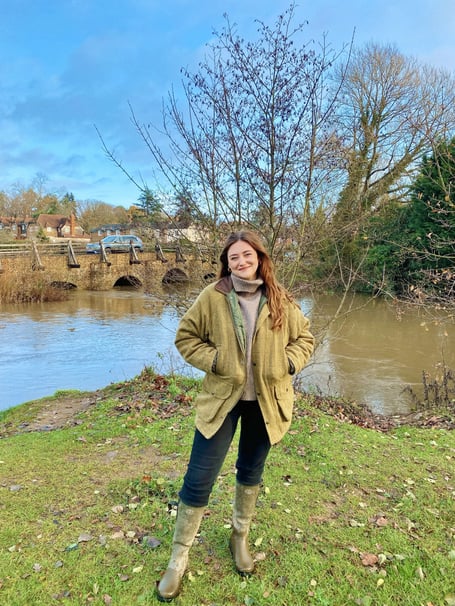
Fears are mounting that local government reorganisation could sideline social value, a principle many councils see as vital to building fairer, stronger communities. Below, Cllr Phoebe Sullivan, Waverley Borough Councillor for Witley & Milford and a Thursley Parish Councillor, shares her views on why protecting social value and local voice must remain central to decision-making.
Villages thrive when policy reflects place, not just population.
As local government reorganisation approaches in West Surrey, that principle is being put to the test. Reorganisation is often framed as an exercise in efficiency: larger councils, fewer layers, and quicker decisions. But for villages, the risk is clear. In the pursuit of scale, the places that rely most on local understanding can be the easiest to overlook.
I recently spoke to The Telegraph about the danger of villages losing their voice as councils grow larger and decision-making becomes more remote. That concern has only deepened. Reorganisation may streamline structures, but without strong local representation, it risks weakening the connection between residents and those making decisions on their behalf.




As a resident of Thursley and a proud member of Thursley Parish Council, I see every day what villages actually contribute. Not just beauty or heritage, but social glue: volunteers who keep fetes running; neighbours who look out for one another; parish councillors who put the interests of residents first and have a finger on the pulse of local issues – whether it’s where flooding happens, where fires break out on the commons, which lanes are unsafe, or which developments would irreversibly change the character of a place.
This is not nostalgia. It is practical local knowledge, and it matters.
So, what makes villages thrive? Strong local leadership. Services people can reach and rely on. Roads and lanes that are safe. Green spaces that are valued and protected. Development that fits its surroundings rather than overwhelms it. Thriving villages have active parish councils, supported local businesses, pubs, and farms, and residents who feel heard. They depend on decision-making that understands place, not just targets.
Yet villages face growing pressure: traffic on rural roads never designed for heavy use; development proposals that stretch infrastructure without improving it; planning decisions that prioritise numbers over character; and now, the prospect of being absorbed into much larger authorities where density, not distinctiveness, risks shaping priorities.
Protecting villages does not mean resisting all change. It means demanding common sense. It means saying no to inappropriate development that damages the countryside and yes to improvements that genuinely serve local people. It means protecting green spaces, village services, and road safety, while backing thoughtful investment where it belongs. Housing need and heritage protection are not opposites if decisions are made properly and locally.
Above all, villages must have a strong voice in the new structures being created. Parish councils, ward councillors, and community groups must not be sidelined in the name of efficiency.
Villages like Thursley, Frensham, Peper Harow, Witley, Brook, Tilford, Elstead, and Churt, to name a few, are not footnotes on a map. They are living communities with identities, histories, and futures worth defending.
Comments
We've recently changed our login process. If you have an account for commenting, you will need to re-register on the login window.
This article has no comments yet. Be the first to leave a comment.