
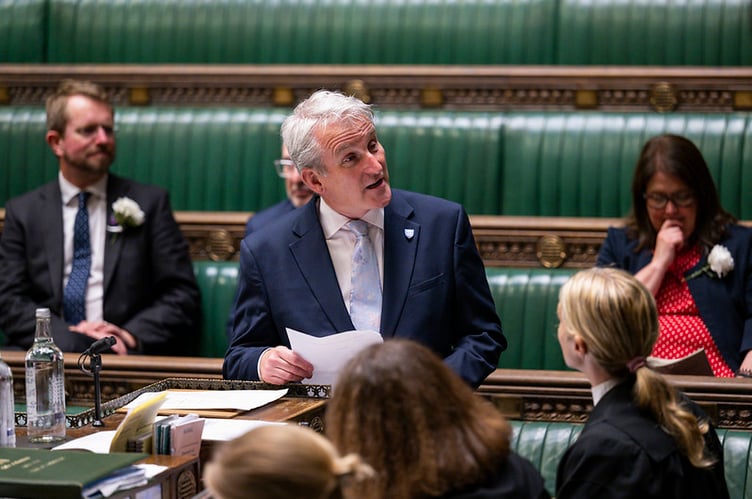
This week marked two important milestones for the new Labour Government. It was 100 days since Andy Burnham entered Downing Street and the first Budget delivered by his Chancellor, John Healey.
When Mr Burnham arrived, he promised much - the most radical government in 40 years, a break with ‘neoliberalism’ and a new political and economic model. The implication was not only a rejection of the previous Conservative governments’ approach, but also the New Labour years that preceded them.
So, has the reality lived up to the rhetoric?
There have been some policy interventions on bus fares, support for pubs (but not nearly enough), a crackdown on people playing loud music on buses, approval for the Jackdaw gas field and changes to prisoner release.
These measures do not sum to the radical transformation promised, and certainly the latter two followed considerable pressure from elsewhere. I’m afraid this week’s Budget largely followed in the same vein. All told, there were 98 measures announced, which may be a record. But very many of them were rather small.
To be fair, we still await the much-touted ‘Ten-Year Plan for Britain’, so we shall see what that tells us.
For now, the Chancellor’s package of measures was supposed to offer some short-term “breathing space” for households and businesses. The commentators called it right when they said to expect a ‘steady as she goes’ Budget, but the situation calls for much more than that.
The headline was a one-off £100 energy payment for those in council tax bands A-D.
We also knew in advance of the Budget that the Chancellor was abolishing gas standing charges (which will benefit lighter users but could hit heavier users, such as large families, harder - since the standing charge cost will be transferred to the per-unit-used charge). However, for rural communities like ours, many households are not connected to the gas grid and rely on heating oil. The gas standing charge doesn’t affect them, and they remain exposed to volatile, and currently very high, oil prices.
A freeze on prescription charges was expected and had been covered in the press. This did not, though, materialise in the final Budget document.

A planned 5p increase in fuel duty will be delayed until next summer. This is important and welcome for rural areas like ours, where people often have little choice but to drive and the distances are longer. However, the spectre remains of pay-per-mile road user charging for electric vehicles, a policy announced by the former Chancellor. That would be bad for rural areas for the same reason. I can only assume that this is still coming down the road.
Actually, the most significant thing in the Budget for household finances was not the individual measures. It is the weak projected growth figures that will most affect incomes.
And then there is the question of what was not there. There was no reform of welfare that we know is needed to properly fund defence. And only the tiniest of action on unemployment, and especially youth unemployment, which I continue to believe is among the very biggest issues facing our country.
Next week I will write about what the Budget means for local businesses.
Comments
We've recently changed our login process. If you have an account for commenting, you will need to re-register on the login window.
This article has no comments yet. Be the first to leave a comment.