
Up to the 19th century, political ‘parties’ were really just groups of politicians, or factions you might say, within Parliament.
Then the 1832 Reform Act extended the vote to more property owners (though only men) and the 1867 Reform Act gave the vote to hundreds of thousands of the working class (though still only men) for the first time.
That meant parties needed a national organisation to coordinate their work to appeal to everyday voters across the country.
The National Union of Conservative and Constitutionalist Associations held its inaugural meeting in 1867, and a decade later came the National Liberal Federation. In 1900, the new (in the original sense!) Labour Party initiated its annual gatherings as the Labour Representation Committee.
Party conferences today look very different. Though not on the scale of American parties’ conventions (which, by the way, predate ours historically), they are now huge gatherings of thousands of party members – and many thousands of others such as journalists, think tanks, interest groups, charities and overseas visitors.
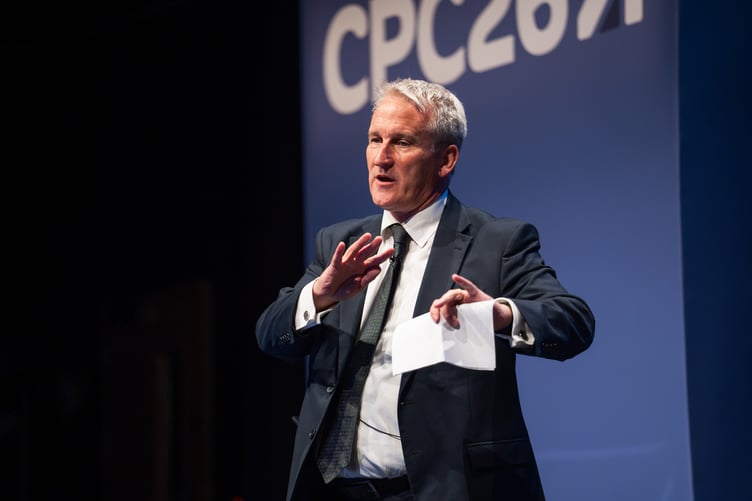
I am just back from the Conservative Party conference in Birmingham, which I attended alongside a delegation of East Hampshire Conservative Party members.
While the bit that makes it on to the television is the ‘main stage’ part of the conference, the much bigger part is the less formal meetings, debates and events on the ‘fringe’. There is also quite a big social aspect to party conferences, reflecting that political parties are at their heart largely voluntary organisations, and this is their biggest get-together.
For me, this year’s party conference was a great opportunity to meet many – about two dozen – charities in the health and care sectors, including many with a presence in Hampshire. They attend all the main parties’ conferences, quite an exhausting commitment for them!
I also spoke at seven fringe events, as well as the ‘main stage’ health session, which this year focused on the potential of AI and technology innovation to improve health outcomes.
Overall, the 2026 party conference season will be remembered for some of the key announcements made.



Andy Burnham made three big announcements – on his wish to reopen the debate about Brexit, on proportional representation, and on social care – though the latter was quite light on detail. Unusually for a party in government, these were largely about what he wanted to happen after the next general election.
From my party’s conference, announcements particularly relevant to East Hampshire include the plans to abolish inheritance tax on the family home, abolish the Government’s planned High Value Council Tax Surcharge, and reduce the cost of new-build homes by cutting red tape – all especially significant in areas like ours with higher house prices.
I was also very pleased to hear the commitment to cutting the cost of employing young people and creating a new Get to Work programme. I have written more than once in this column of my fears for what has been happening on youth unemployment.
These party conferences have set the scene for politics in the time ahead. The next big moment is the Budget. We shall see then what the Government’s more immediate plans are.
Comments
We've recently changed our login process. If you have an account for commenting, you will need to re-register on the login window.
This article has no comments yet. Be the first to leave a comment.