
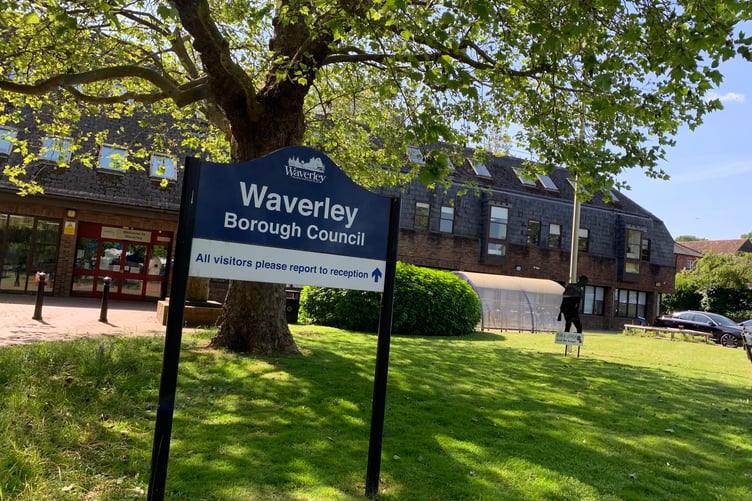
Waverley Borough Council has called on the Government to rethink housing targets that will do “unacceptable harm to our towns, villages and countryside” as figures show the majority of Surrey councils lack suitable land for development.
Councils have to demonstrate they have sufficient land for five years’ worth of housing – against their government-set goals.
Authorities that fail to hit their five-year supply have far less control over where, and the types of housing that gets built.
This is because developers have the power to appeal refused planning permissions, and inspectors will “presume in favour of sustainable development” when councils do not have enough land.
Only three Surrey councils, Mole Valley, Guildford, and Reigate and Banstead, currently have sufficient space to hit their housing targets.
The worst affected area is Elmbridge which has less than a year’s worth of deliverable housing sites remaining – unless they find new sites, opt to build in the green belt, or intensify town centres.
Waverley, Epsom and Ewell, and Tandridge all have less than two years, while Surrey Heath, Spelthorne, and Runnymede has fewer than four year. Of those that can not demonstrate enough sustainable housing sites, Woking at 4.6 years’ is the closest to the minimum benchmark.
The crisis has prompted Waverley Borough Council to call on the Secretary of State to urgently review national planning rules – and said the Government’s revised housing targets were “undeliverable, environmentally damaging, and out of step with the realities facing constrained rural authorities”.
Council leader Cllr Paul Follows said the current approach places Waverley in an “impossible position”, with the borough’s annual housing target more than doubling from around 710 to over 1,450 homes per year despite extreme land and environmental constraints.
He said: “More than 80 per cent of Waverley is Green Belt or part of the Surrey Hills National Landscape.




“The remaining land simply cannot absorb the level of development the Government is demanding, not without unacceptable harm to our towns, villages and countryside.”
The council said it was not against the provision of more housing, including affordable homes, and that it was outperforming its previous targets.
But, it said, the new nationally imposed targets were pushing development into a small proportion of unprotected land with building taking place in areas that lacked adequate infrastructure.
The other issue, is that councils are judged on homes built, even though they do not control build-out rates. Waverley Borough Council has 5,500 homes with planning permission that remain unbuilt.
Cllr Liz Townsend, portfolio holder for planning and economic development added: “If these targets continue to be imposed without flexibility, the consequences for Waverley will be severe.
“We risk overdeveloping our towns and rural villages, placing huge pressure on already-strained roads, public transport, schools, healthcare and water and power utilities.
“We would also see the loss of valued green spaces and wildlife habitats, running directly against the Government’s own environmental goals, and an inevitable rise in public opposition and legal challenges. Far from accelerating delivery, this approach could actually slow it down.”
Surrey councils housing land supply (in years):
Elmbridge 0.9
Waverley 1.3
Epsom and Ewell 1.5
Tandridge 1.9
Surrey Heath 3.
Spelthorne 3.8
Runnymede 3.9
Woking 4.6
Mole Valley 5
Guildford 6.6
Reigate and Banstead 6.7
Comments
We've recently changed our login process. If you have an account for commenting, you will need to re-register on the login window.
This article has no comments yet. Be the first to leave a comment.