
An earlier Peeps into the Past article recounted the story of Frensham’s perpetual curate, the odious Revd Stephens, writes Roy Waight.
Other parishes were more fortunate. One was Crondall, whose curate, the Revd Edmund Yalden White, nephew of the famous naturalist Gilbert White, was a great man. His book, Ordained in Powder, published by the Herald Press in 1966, is a delightful account of 19th century life in Crondall.
The agricultural depression of the ‘hungry 40s’ actually reached a local peak in 1830, when from Kent to Dorset the skies were alight with burning ricks as labourers rioted. Several of the local gentry responded by trying to help the poor agricultural workers of Crondall. Squire Charles Lefroy of Ewshot House was particularly active.
Money was collected, soup kitchens were organised and bread was distributed. To mitigate the hardships of the times, several landlords granted plots of land to the poor. In 1835, Mr Lefroy won a prize given by the banker Sir Thomas Baring to the man who left the greatest number of plots to landless labourers, the plots being not less than half an acre nor more than two acres each. The Birch family at Clare Park, like Mr Lefroy, also gave plots and succour during those hard times.

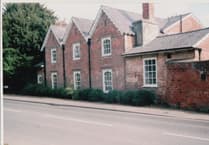
This practice marked an early example of the subsequent allotment movement. The benevolence of these men may well explain why there was no trouble in Crondall at the time of the riots. Once famed for disorder, the landless labourers of Crondall now had something to do. In this, the gentry were encouraged by the admirable Parson White. Though himself hardly rich, he had no fewer than 27 parishioners at his table for Christmas dinner one hard winter.
Parson White was one of those amazingly energetic 19th century characters who did so much to alleviate the misery of rural life. As curate he would often walk from Crondall to Newton Valence and back, some 30 miles. His diary records an endless succession of generous and thoughtful acts. He was not a vicar, still less a rector, but a lowly curate.
He became curate in 1828, at which time the vicar was the pluralist and absentee Revd James Ogle. Ogle held the benefice of Crondall together with that of Bishops Waltham for 24 years but rarely visited Crondall. The work was done first by his curate Lancelot Jefferson, and then by Edmund Yalden White.
There was mounting anger at such pluralism and non-residence. It seemed unfair that one man might wax fat on the tithes of parishes he never visited, while the curate who did the work received little. Cobbett, of course, had a view on the subject of pluralities and deprecated it. He calculated, based on his rural journeys, that some 1,496 parishes he counted were in the hands of just 332 incumbents. To address such a state of affairs the government eventually passed the Pluralities Act in 1838. This stipulated that livings held in plurality had to be within four miles of each other.
When Parson Ogle died, the local parishioners of Crondall petitioned the Earl of Guildford, who was the Master of St Cross and patron of the living, to have their popular curate, White, made vicar.
They had no success. The living had already been promised to a Revd William Dann Harrison. The Revd Harrison arrived, looked around, didn’t like the vicarage, and left. But he accepted the role and was, for the next 58 years, the absentee vicar of Crondall.
The Earl of Guildford was himself guilty of more substantial clerical abuse. He was the son of the Bishop of Winchester and nephew of the prime minister, Lord North. His father made him master of St Cross in Winchester. In that sinecure he extracted no less than £50,000 (many millions in today’s money) for doing absolutely nothing. He was eventually arraigned on a charge of maladministration of parishes, of which Crondall was one, and forced to resign. The scandal inspired Trollope to write his novel The Warden.
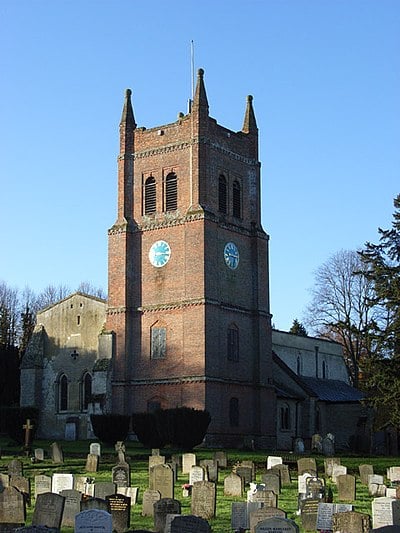
Meanwhile, Edmund Yalden White kept a tactful silence. He went on serving his parishioners as curate for 32 years. He died in 1862. He is commemorated by a scarcely legible stone on the south side of the church in Crondall.
Comments
We've recently changed our login process. If you have an account for commenting, you will need to re-register on the login window.
This article has no comments yet. Be the first to leave a comment.