
A Farnham mother who has battled skin cancer believes years of chasing a suntan on girls' holidays abroad led to her diagnosis – and is now urging others to protect themselves in the sun.
Sarah Goldup’s warning comes after last week's heatwave brought record temperatures to parts of Surrey, with forecasters warning that more spells of hot weather are expected this summer.
Ms Goldup, 42, is sharing her story as melanoma cases in the UK are projected to rise to a record 26,500 a year by 2040.

.jpeg?width=209&height=140&crop=209:145,smart&quality=75)


She is backing a national campaign after being diagnosed with melanoma twice and undergoing extensive treatment.
Her story comes as melanoma cases in the UK are projected to rise to a record 26,500 a year by 2040.
Ms Goldup believes the damage to her skin happened more than 20 years ago.
"I was never a sunbed user, but it was the era of girls' holidays where it was all about flying off somewhere sunny and coming home with a tan," she said.
"When I was 19 we went to Tenerife. Some of my friends had darker skin, but I'm from an Irish background. I used oil instead of sunscreen and got really badly burnt.
"I was diagnosed with melanoma when I was 38, so I'm pretty sure the damage was done back then, even though it didn't show itself until years later."
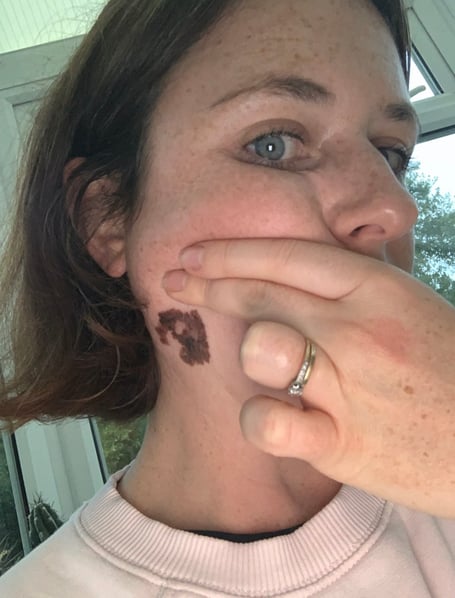
She had a mark on her neck from her teens but convinced herself it was simply a birthmark. As it gradually changed shape and colour, her parents repeatedly encouraged her to have it checked.
Eventually she visited her GP.
"The doctor said it ticked every box for melanoma using the ABCD rule – asymmetry, an irregular border, different colours and being larger than 6mm. They called it an 'ugly duckling' marking."
She was fast-tracked for a biopsy and, after a six-week wait, was told she had malignant melanoma.
"It was shocking and upsetting," she said.
Ms Goldup underwent surgery to remove the cancer from her neck before doctors discovered a second melanoma on her chest.
Fortunately, follow-up scans showed the cancer had not spread to her organs.
Doctors believed cancer cells had travelled from the original tumour on her neck to her chest, but nowhere else.
As a precaution, Ms Goldup underwent a year of immunotherapy to reduce the risk of the cancer returning.
Just months after completing treatment, however, she discovered a swollen lymph node in her neck.
Tests confirmed the melanoma had returned.
Surgeons removed 35 lymph nodes, 25 of which contained cancer, meaning the disease had progressed to stage three.
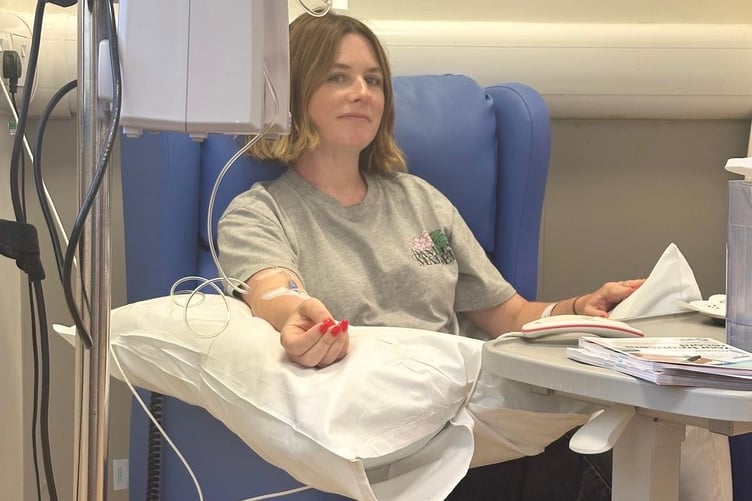
She began a further course of combination immunotherapy in April and is now receiving maintenance treatment every four weeks until April 2027.
Thankfully, her latest scans have all been clear.
"I'm doing everything I can," she said. "I eat well, exercise every day, cover up in the sun and wear factor 50 sunscreen every day, even in winter."
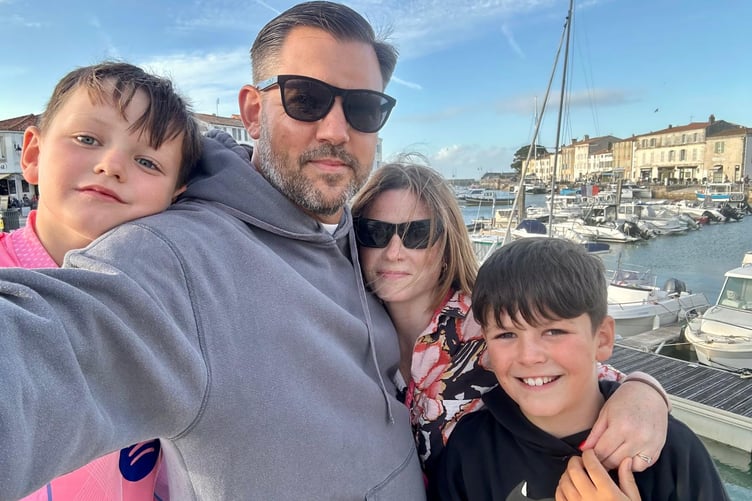
Sarah, a freelance copywriter, and her husband Lee have two sons, Lucien, 10, and Rafferty, seven.
She now makes sure they are protected whenever they're outdoors.
"They don't always like wearing hats or sunscreen, but it's so important," she said.
"It's not just people with fair skin who can get skin cancer – darker skin can be affected too. And you don't have to be abroad. The sun in the UK can also damage your skin."
Nearly nine in 10 melanoma cases in the UK are linked to ultraviolet (UV) exposure from the sun or sun beds.
Sarah hopes sharing her experience will encourage others to take simple precautions.
"My diagnosis came as a huge shock, especially when the cancer returned after treatment.
"I want people to know you can still enjoy the sun safely. It really can be as simple as seeking shade, covering up and wearing sunscreen."
The national campaign is being run by Cancer Research UK and Nivea Sun.
The charity advises people to seek shade during the hottest part of the day, wear clothing, hats and sunglasses to protect exposed skin, and use sunscreen with at least SPF 30 and a four or five-star UVA rating.
Claire Knight, senior health information manager at Cancer Research UK, said: "Sunburn is a clear sign of skin damage, but even if you've been sunburnt before, it's never too late to start protecting your skin.
"Whether you're at home or abroad, when the sun is strong, seek shade, cover up and wear sunscreen with at least SPF 30. Make sure you apply plenty and reapply it regularly.
"The sun can be strong enough in Surrey and across the UK to cause sunburn between mid-March and mid-October."
Comments
We've recently changed our login process. If you have an account for commenting, you will need to re-register on the login window.
This article has no comments yet. Be the first to leave a comment.