
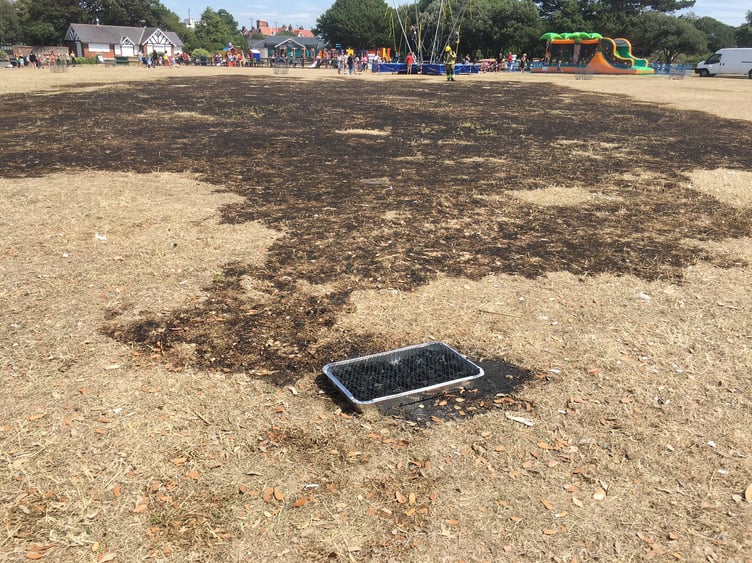
The stark figure comes as fire chiefs welcomed new government guidance on disposable barbecues and urged people not to use them in the countryside, parks or other open spaces during the continuing hot and dry weather.
Deputy Chief Fire Officer Shantha Dickinson said: “So far this year we have already seen more wildfires in Hampshire and the Isle of Wight than we did in the whole of 2025.
“We welcome the publication of the Government’s new statutory guidance on disposable barbecues, which is an important step in reducing the risk of fires in our countryside, green spaces and communities.
“While these new temporary guidelines are a positive development, they relate only to the sale and distribution of disposable BBQs, they do not go as far as banning the use of them.
“We would like to urge everyone who has already purchased a disposable BBQ to help us prevent fires in the countryside, parks and other open spaces by not using it.
“Disposable BBQs are just one potential ignition source, during periods of hot and dry weather, any heat source has the potential to start a fire.
“Just a single discarded cigarette or sunlight reflecting through a glass bottle can quickly escalate into a serious wildfire, causing significant damage to wildlife and the countryside, putting lives at risk, and placing further pressure on already stretched emergency services.”
Fires, barbecues – including disposable and purpose-built barbecues – and outdoor cooking equipment such as stoves are banned within the New Forest National Park.
The warning comes as firefighters continue tackling a major wildfire off the A31 in the New Forest, which has affected an area of approximately 1.6 sq km.




The fire service is urging people not to light campfires, barbecues or bonfires in the countryside while conditions remain dry.
People are also being asked to take litter home, fully extinguish smoking materials and avoid parking on dry grass because the underside of a vehicle can reach temperatures of more than 400C.
Comments
We've recently changed our login process. If you have an account for commenting, you will need to re-register on the login window.
This article has no comments yet. Be the first to leave a comment.